Our insights
Beautiful infrastructure needs a purpose – and a system to make it real

Insight
What Melbourne’s Metro Tunnel Project tells us about civic beauty, design leadership and the conditions for exceptional work.
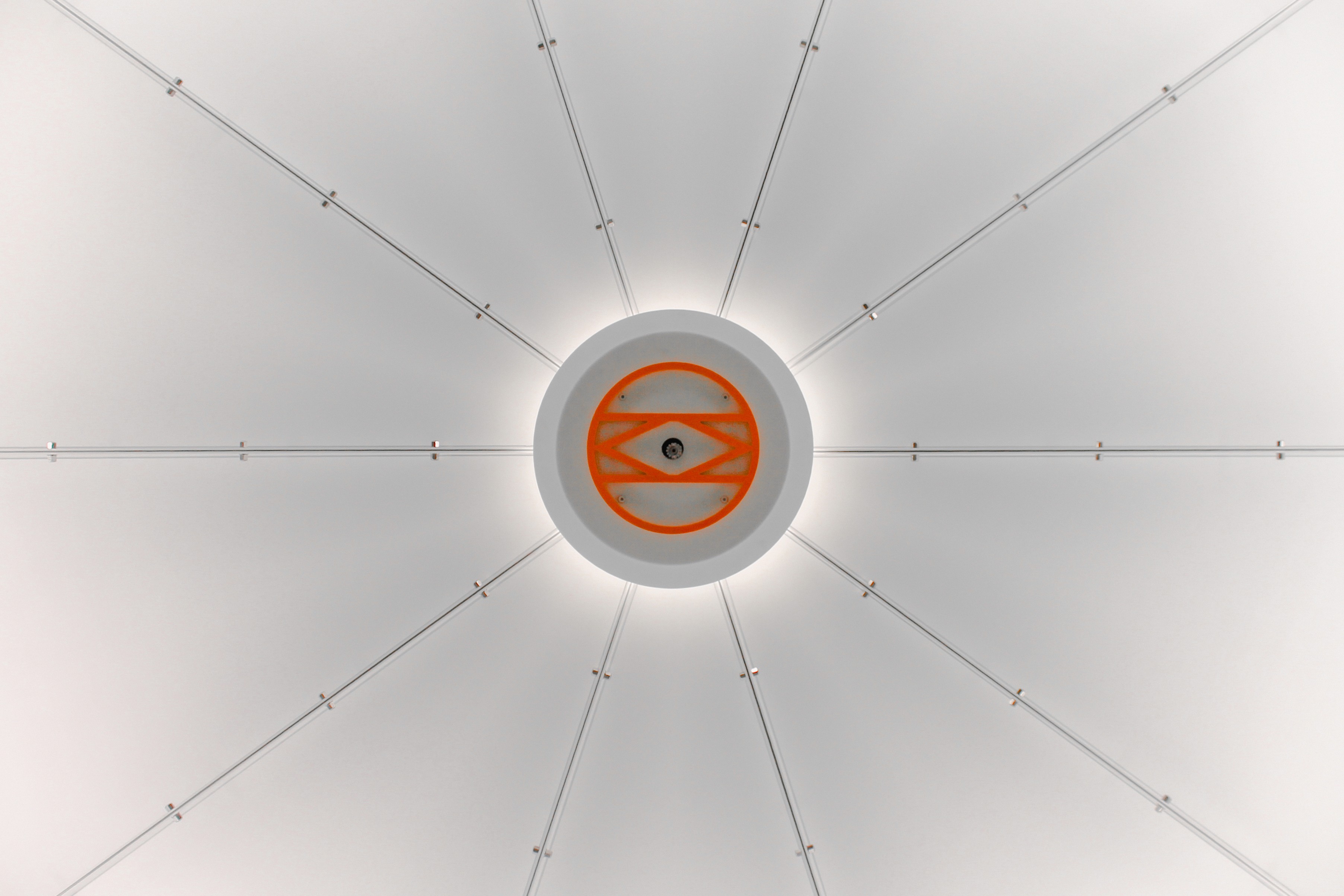
Melbourne’s Town Hall Station has been named one of the World’s Most Beautiful Stations for 2026 by the Prix Versailles. It is fitting recognition for an extraordinary piece of public infrastructure, and for the architects, engineers, designers, builders, artists and client-side teams who shaped it over more than a decade. Its generous underground volumes, branching columns and locally designed chandelier lights give the station a presence worthy of its position beneath the heart of Melbourne.
The word beauty deserves some examination. It can quickly become an argument about appearance: more architecture, more expression, more interesting things to look at. Those things have their place, but the case for beauty in infrastructure needs to go deeper. We should understand what that beauty is for, what it contributes to the place around it, and what it means for the people who will experience it.
The Metro Tunnel stations arrived at a moment when Melbourne was making a generational commitment to public transport. Five new underground stations were being inserted into the daily life of the city, connecting neighbourhoods, universities, hospitals, workplaces and some of Melbourne’s most important civic and cultural places. They would become part of the city's fabric, experienced by millions of people over generations.
For me, that puts them in the same broad family as a library or museum, as much as they are also transport infrastructure. Their first obligation was functional, but they were also public buildings with an opportunity to express confidence in public transport, in our connections to each other and in Melbourne itself. They could help restore the idea that transport infrastructure deserves the same civic ambition we bring to our other great public buildings. Beauty had real work to do here: making public transport a more generous part of everyday life and providing enduring markers of this moment in the city's evolving story.
Beauty belongs to Melbourne
Melbourne is the hero of this story. Its stations belong to a world of streets, buildings, histories, cultures, communities and daily habits that existed long before the Metro Tunnel and will continue evolving around it. Their contribution has to be understood in that wider context.
Town Hall makes this unusually clear. The station sits beneath Swanston Street in Melbourne's civic and cultural heart, surrounded by City Square, Melbourne Town Hall, St Paul's Cathedral, Federation Square, Flinders Street Station, theatres, arcades and laneways. Its architecture enters a conversation with all of them, adding a new layer to a central part of Melbourne. The question was always larger than what a beautiful underground station should look like. It was what this station should contribute to the city.
The answer changes along the line. Anzac meets the ceremonial landscape of St Kilda Road and the Shrine precinct. State Library sits amid another dense concentration of education, culture, retail and city life. Parkville enters a world of medicine, research and learning. Arden has a different task again, helping establish the character of a neighbourhood still emerging around it. Each station needed to feel part of the same railway while belonging unmistakably to its own place.
This thinking was embedded in the project well before the stations took their final architectural form. The Metro Tunnel Urban Design Strategy established the spatial and civic ambition, setting out project-wide principles for high-quality passenger experience, public spaces that put people first and design that would contribute to Melbourne's identity. Those principles were translated into precinct-specific guidance, recognising that each station and its surrounding public realm had a different contribution to make.
The Creative Strategy extended that thinking into culture and experience. It sought a recognisable identity across the line while giving expression to the stories, communities and creative character of individual precincts. Together, the strategies established a shared direction without prescribing a common architectural answer.
The architectural team – Hassell, Weston Williamson + Partners and RSHP – gave that broader ambition physical expression through its Open Metro philosophy. The approach brought a recognisable design language to the stations through generous volumes, daylight, clear sightlines and strong connections between street and station. Each station could share that language while developing its own architectural character in response to its setting.
There is a useful lesson here for civic architecture more broadly. Great public buildings begin with an understanding of the world they are entering and the contribution they might make. Architectural distinctiveness matters, but so does belonging. Town Hall could be bold because its ambition was grounded in a clear understanding of its civic role.
Beauty is something we experience
Beauty in infrastructure is experienced as much as it is seen. A station can be visually spectacular and still be miserable to use, just as a relatively modest building can offer a wonderful experience. Light, spatial generosity, acoustics, comfort, material quality, accessibility, legibility and the welcome from the street all shape how a place feels. These qualities operate alongside the non-negotiables of safety, movement and operational performance.
The two deep CBD stations, Town Hall and State Library, offer a particularly good illustration of how design ambition and engineering ingenuity can come together.
The Open Metro philosophy placed considerable importance on daylight, visual connection and generous, open spaces. At Arden, skylights bring natural light down to the concourse and platforms. At Parkville, passengers can see the sky from platform level, some 25 metres beneath the street. But at the two deep CBD stations, the combination of depth and the constraints of building beneath central Melbourne meant daylight could not reach the platforms. The same architectural ambition needed a different expression.
The design and engineering response drew on the stations' trinocular construction: three overlapping mined tunnels creating expansive underground caverns with broad platforms, sweeping vaulted ceilings and long, unobstructed sightlines.
At Town Hall, the platforms sit 27 metres beneath the street. Yet the experience is remarkably open. The 18-metre-wide platforms, soaring ten-metre-high vaulted ceilings and carefully designed lighting create a sense of generosity that feels almost improbable at that depth. State Library achieves a similar experience even deeper beneath the city.
What I find particularly satisfying is that the ambition survived the constraints. Openness remained a guiding principle, even where daylight could no longer provide it. The design and engineering teams worked together to create an experience that honoured the intent while responding intelligently to the conditions.
That is a powerful demonstration of design excellence. Much of what makes a place feel beautiful comes from decisions that passengers will never recognise individually. Structure, architecture, lighting, movement and engineering have to work together. When they do, people simply experience the result.
There is something profoundly generous about investing that level of care in ordinary public life. Millions of people will pass through these stations on unremarkable days: travelling to work, taking a child into the city, heading to an appointment, meeting someone for dinner or getting home after a long day. For most, the station will occupy only a few minutes of their journey. But those minutes are still part of their lives, and the quality of those experiences adds up, good or bad.
I think we should resist the temptation to justify every part of that quality through an economic return. Good design can improve accessibility, support public transport use, strengthen local economies and contribute to wellbeing. Those benefits matter, and public investment should be accountable. But beauty also has intrinsic value. A city should be able to give people dignity, comfort and occasional delight because those things are worth having.
That doesn't put beauty beyond scrutiny. Public money deserves a persuasive argument for the level of design investment proposed. That argument might be civic, cultural, experiential or economic, but it should be deliberate, proportionate and defensible. If we cannot explain why a particular investment matters, we are probably drifting into folly.
Understanding what we value is one thing. Making sure those values survive the realities of a major infrastructure project is another.
The purpose needs a system
Metro Tunnel began with unusually strong foundations for design quality. The Urban Design Strategy gave civic ambition a place within the project's formal requirements, connecting its principles to procurement, design development and approvals. Independent design review through the Office of the Victorian Government Architect (OVGA) provided another mechanism for testing emerging outcomes against that ambition.
These arrangements mattered because major projects are powerful machines. They take an enormous problem and divide it into disciplines, contracts, packages, programs, approvals and responsibilities so thousands of people can get something built. While that division of labour is essential, it also creates a risk: people can make entirely rational decisions within their own areas of responsibility while gradually diminishing the quality of the whole.
A structural change may simplify construction while making a public space less generous. An operational requirement may solve a legitimate problem while making an arrival experience more difficult. A saving within one contract package may appear modest, yet materially affect something passengers will experience for decades. The consequences accumulate, often through decisions that never appear as questions of beauty or civic quality.
As Metro Tunnel moved through procurement, contract close, detailed design and delivery, the pressures became more specific and the constraints more real. The systems established early in the project had to remain useful as that reality unfolded.
One part of my role was establishing a process that connected the OVGA's design review more directly with the project's approval pathway and contractual obligations. I wanted that relationship to work in both directions. Design advice has more influence when it connects to the mechanisms through which decisions are actually made, and the advice itself improves when reviewers understand the contractual, approvals and delivery environment in which the project is operating.
There is little value in advice that floats elegantly above the complexity. This can require some discomfort on both sides. Reviewers need to understand genuine constraints without becoming captive to them, while delivery teams need to remain open to challenges they might rather avoid. Good design review needs ambition and a firm grip on reality. It should test assumptions, reveal opportunities and identify where better outcomes are worth fighting harder to achieve.
Done well, it gives decision-makers both the challenge and the confidence they need to make difficult calls. Architectural ambition needs people capable of designing extraordinary things, supported by a project system that can recognise what is worth protecting as those ideas encounter the realities of construction, approvals and delivery.
Build the conditions for good people to do great work
The longer I worked on major projects, the more I came to see design leadership as creating the conditions in which talented people could do their best work. That means clear intent, strong teams, useful governance, good relationships between disciplines and decision processes that people understand and trust.
Some of what we learned through Metro Tunnel could be applied to other projects. At Rail Projects Victoria, my roles ultimately spanned integrated teams working across Metro Tunnel, Regional Rail Revival and Melbourne Airport Rail, building on an urban strategy capability supporting more than $32 billion in infrastructure investment. We developed broader design and sustainability frameworks that could operate across that portfolio, giving different projects a shared approach to quality while allowing them to respond to their own circumstances.
There was no interest in creating a house style. A regional station, an airport connection and a major CBD interchange serve different communities and have different jobs to do. What could be shared was the discipline behind good decisions: understand the place, establish what matters, assemble capable people and connect the project systems around them. This allows design quality to develop through the work of many disciplines rather than depending on a few individuals to keep everyone pointed in the right direction.
The same principle applies within a team. Architects need to design, engineers need to engineer, and specialists need the space to bring knowledge that the person nominally leading design may not possess. Once the intent is understood and the right people and processes are in place, constant senior intervention can become a hindrance, not to mention annoying. It slows decisions, weakens ownership and encourages people to look upwards for answers they are perfectly capable of finding themselves.
There is some humility required here. Talented people will occasionally produce answers different from the ones you would have reached yourself, and sometimes they will be better. Empowerment gets fairly thin if it lasts only until somebody disagrees with you. A strong multidisciplinary team can produce possibilities no individual could have designed alone, provided people feel both responsible for the outcome and free to exercise their judgement.
A useful test of design leadership is what happens when the leader is out of the room.
Know when to dive in
Giving teams room to work does not remove the need for intervention. It makes judgement about when to intervene more important.
The useful test is whether a decision has consequences beyond the part of the project trying to make it. Senior attention becomes valuable when an issue crosses disciplines or packages, when the public experience is being materially changed, when design and delivery obligations are misaligned, or when individually sensible decisions are beginning to diminish the whole.
These moments often look fairly ordinary when they first emerge. A lift door flips so passive surveillance is blocked. A ceiling drops, or a structural efficiency changes the proportions of a space. A reasonable operational requirement joins several other reasonable requirements, and suddenly the experience is no longer what anyone intended. Left alone, the cumulative effect can be far more damaging than any single decision.
That is when to get involved. Understand the problem properly, including the constraints people are working within. Illustrate the likely end result, reconnect the discussion to the project's intent, bring the right disciplines together and make the trade-off visible. Work out what genuinely needs protecting, where there is room to move and who is best placed to take the solution forward. Then give the responsibility back.
The aim is a project system in which most matters are resolved well by the people closest to them, while genuinely consequential decisions receive the attention they deserve. It takes capable people, mutual trust and enough clarity about what matters for everyone to recognise when the bigger picture is at risk.
The beauty behind the beauty
Town Hall Station is now part of Melbourne. People can walk through it, admire the architecture, enjoy the light and space, find their way to the platform and continue with their day. That experience is the result of an extraordinary collective effort, most of which will remain invisible to the people who benefit from it.
Behind the finished station are years of decisions, arguments, drawings, compromises, reviews, engineering, approvals and problem-solving. There are countless moments when somebody challenged an assumption, improved an idea, accepted a better answer from another discipline or decided that one particular thing mattered enough to hold the line. And there are moments when a better decision could have been made. Public-sector leaders, architects, engineers, builders, artists, wayfinding designers, reviewers and client teams all made contributions, often under circumstances that were far from straightforward.
The achievement is that so much of this complexity eventually disappears into the experience of a place. Town Hall Station does not need to explain its governance model to passengers. It needs to welcome them into Melbourne, help them find their way and give them something of value along the way.
Sometimes the result is a station that gets called one of the world's most beautiful. But that's just a label. Real beauty reveals itself through a moment of dignity, a sense of awe, or the feeling that someone bothered to walk in your shoes before they signed off the drawing set.
Beautiful infrastructure begins with understanding why that quality matters. Then comes the harder work of assembling the people, making the choices and building the systems that can sustain the ambition through delivery. Melbourne's new stations show what becomes possible when a city takes that responsibility seriously, investing in places that contribute to its identity and make everyday life a little richer.
And when that ambition survives all the way to completion, the beauty belongs to everyone.
Author